€192.8bn
The EU's budget for 2026
Commitments for a single year, agreed in November 2025.
Council of the EU, 24 Nov 2025
Sovereignty secured
In 2016, 17.4 million people voted to leave the European Union. Nearly half of them said their main reason was that decisions about the UK should be taken in the UK. That has now been done.
EstimateEU contributions avoided since 2021
£19,400,000,000
HM Treasury net figure: £18.9bn of invoices paid June 2021 to December 2025, plus an illustrative 2026 run-rate of £0.7bn a year (the 2025 net outturn). Method£5.3bn
HMT estimate at 31 Dec 2025 was £5.3bn, mostly pensions for former EU staff. Shown here net of the 2026 run-rate so far.£0.7bn
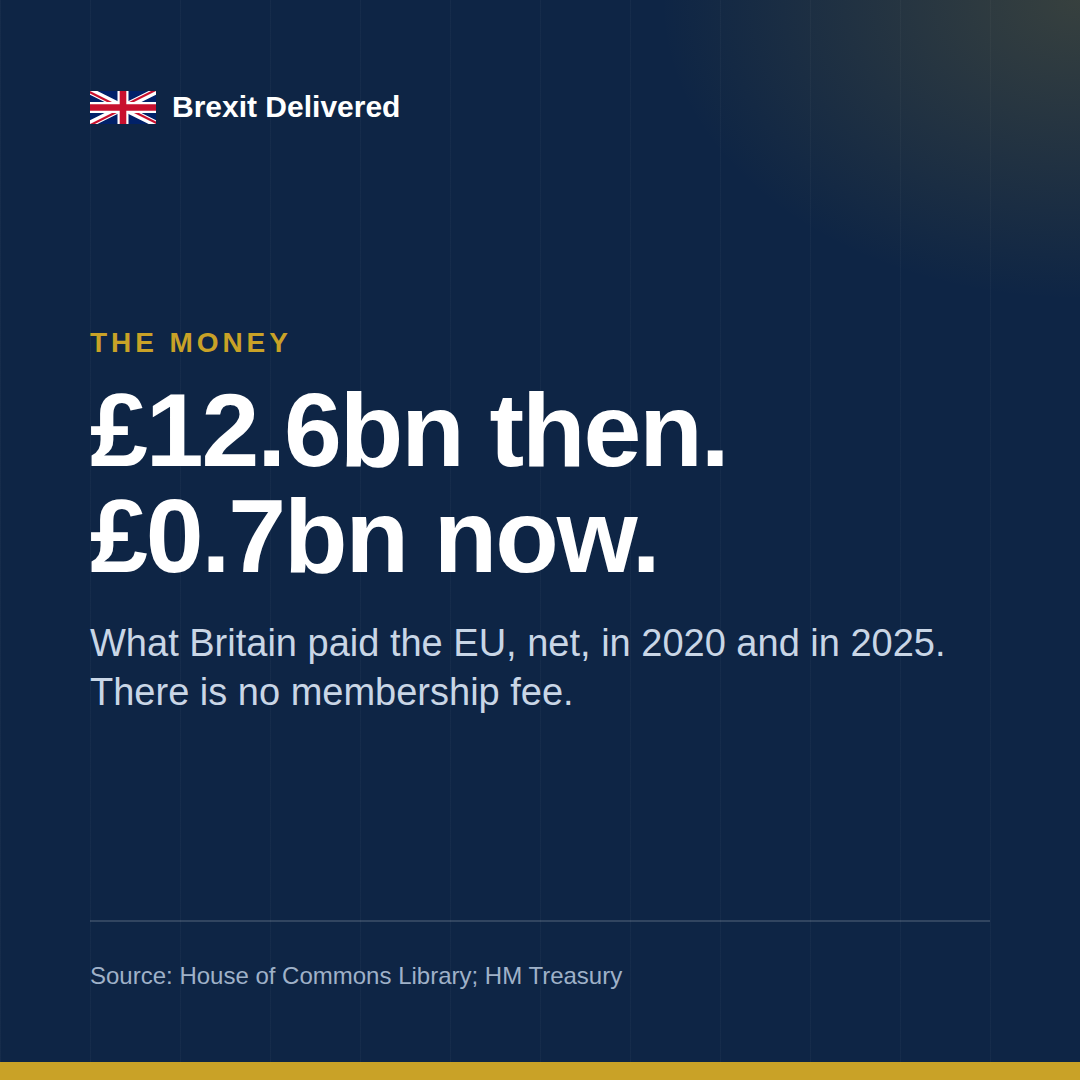
Net paid in 2025, down from £6.4bn in 2022. The last full year the UK paid as a participant (2020) cost £12.6bn net.Money that stays in Britain
The counter is still running. Here is what its two numbers, the yearly rate and the total so far, would pay for.

Per income-tax payer, every year. The annual scenario divided across 40.8 million projected UK income-tax payers in 2026/27.
£525bn
Briefings for Britain puts the value of EU budget payments the UK avoids between 2021 and 2064 at £525bn in today's money, after subtracting the Withdrawal Agreement bill. It is an independent projection, built on Treasury and European Commission budget data, and it does not count wider economic effects. How it is calculated
£35bn
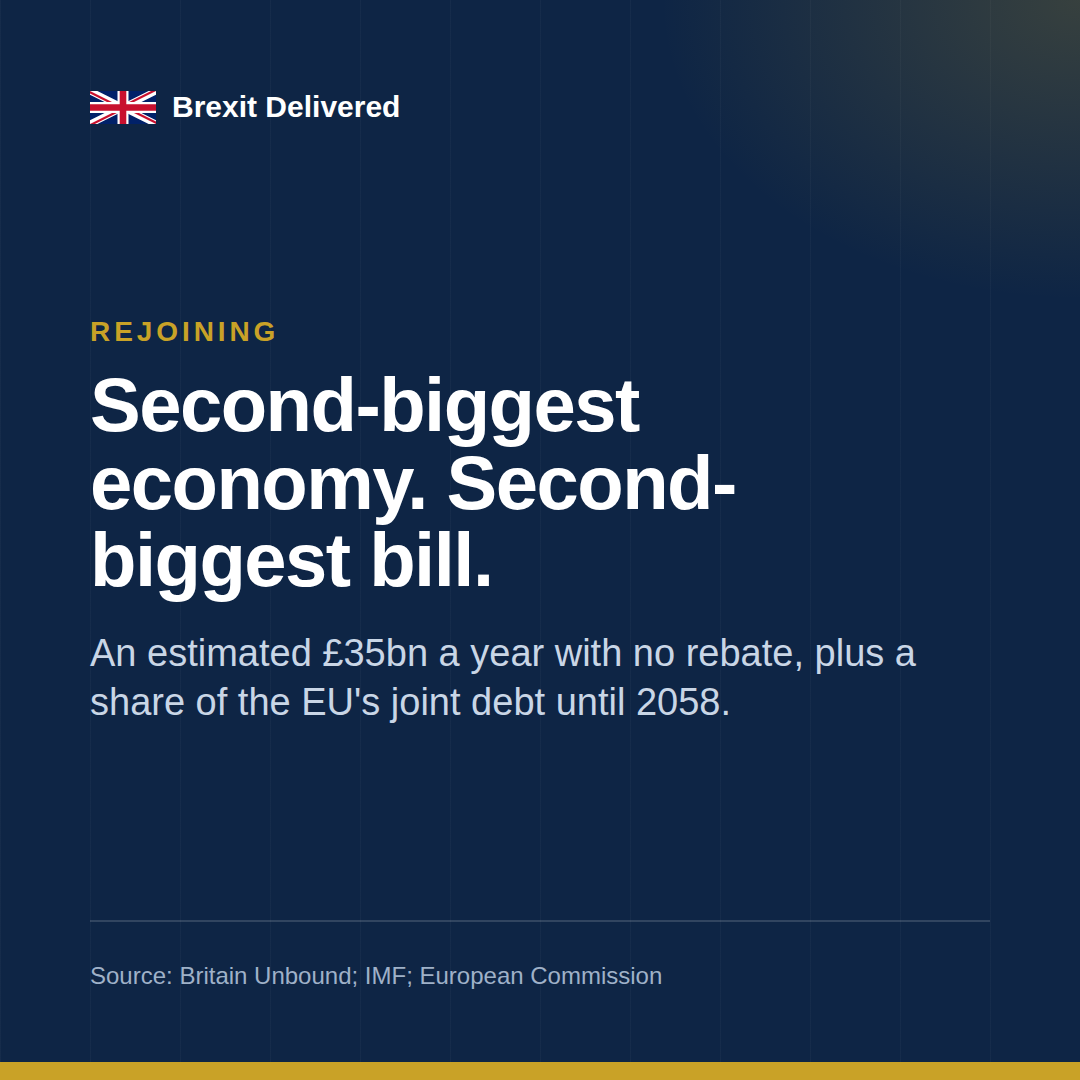
Britain Unbound puts the cost of EU membership at £35bn a year if the UK rejoined in 2028 with no rebate and no opt-outs. That is nearly double what Britain paid before it left. The estimate is based on the European Commission's proposed budget for 2028–2034. How it is calculated
Illustrative equivalents only. Pay figures are annual salary benchmarks and exclude employer pension and National Insurance costs, so the true number of posts would be lower. Capital figures are one-off build costs. Unit costs and sources
Last updated
Where do you stand?
Tap agree or disagree. After each one you'll see the fact behind it.
The people who make our laws should be people we can vote out.
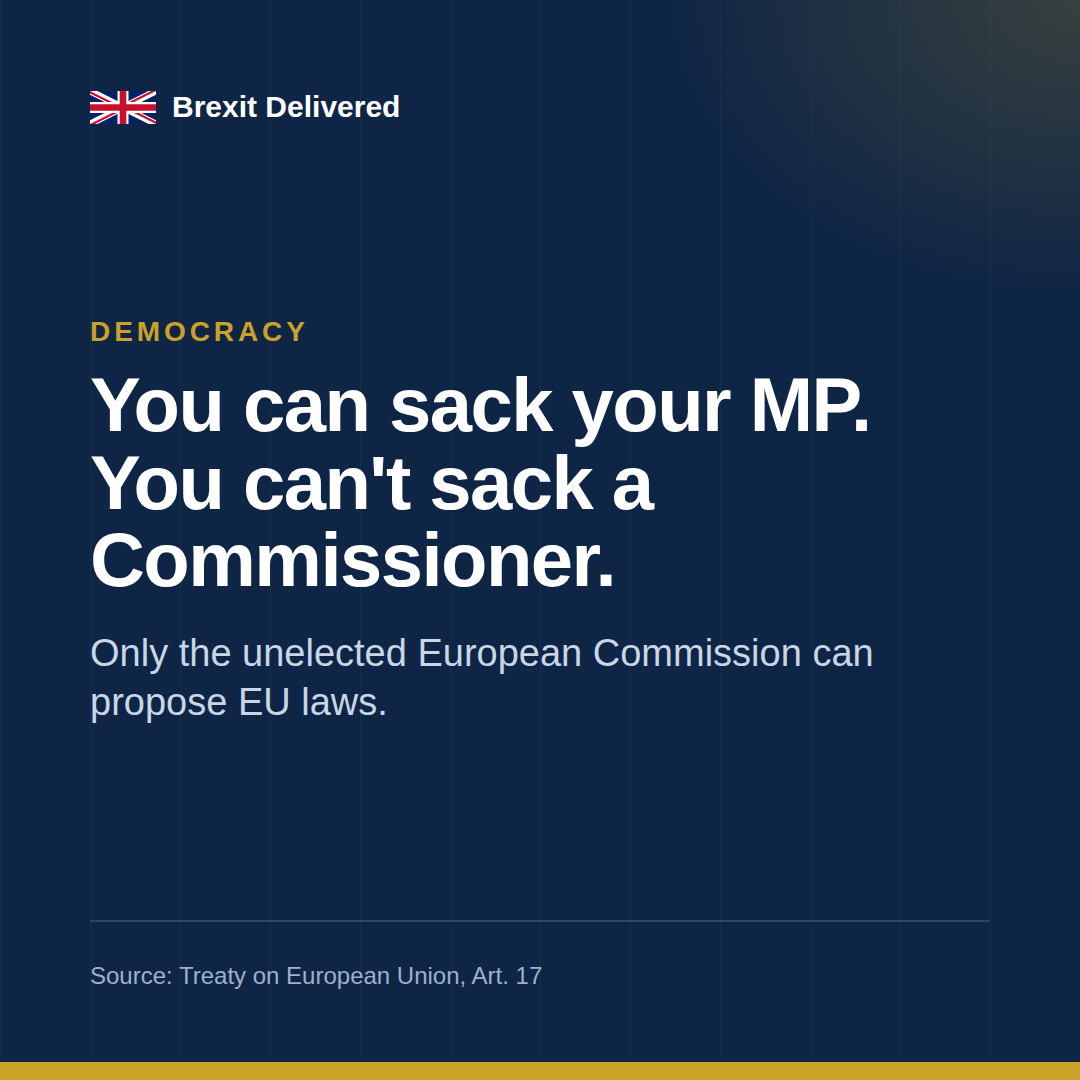
The fact: only the European Commission can propose EU laws, and nobody votes for a Commissioner. Every UK law is now made by MPs you can remove. See how laws are made
Britain should set its own interest rates.
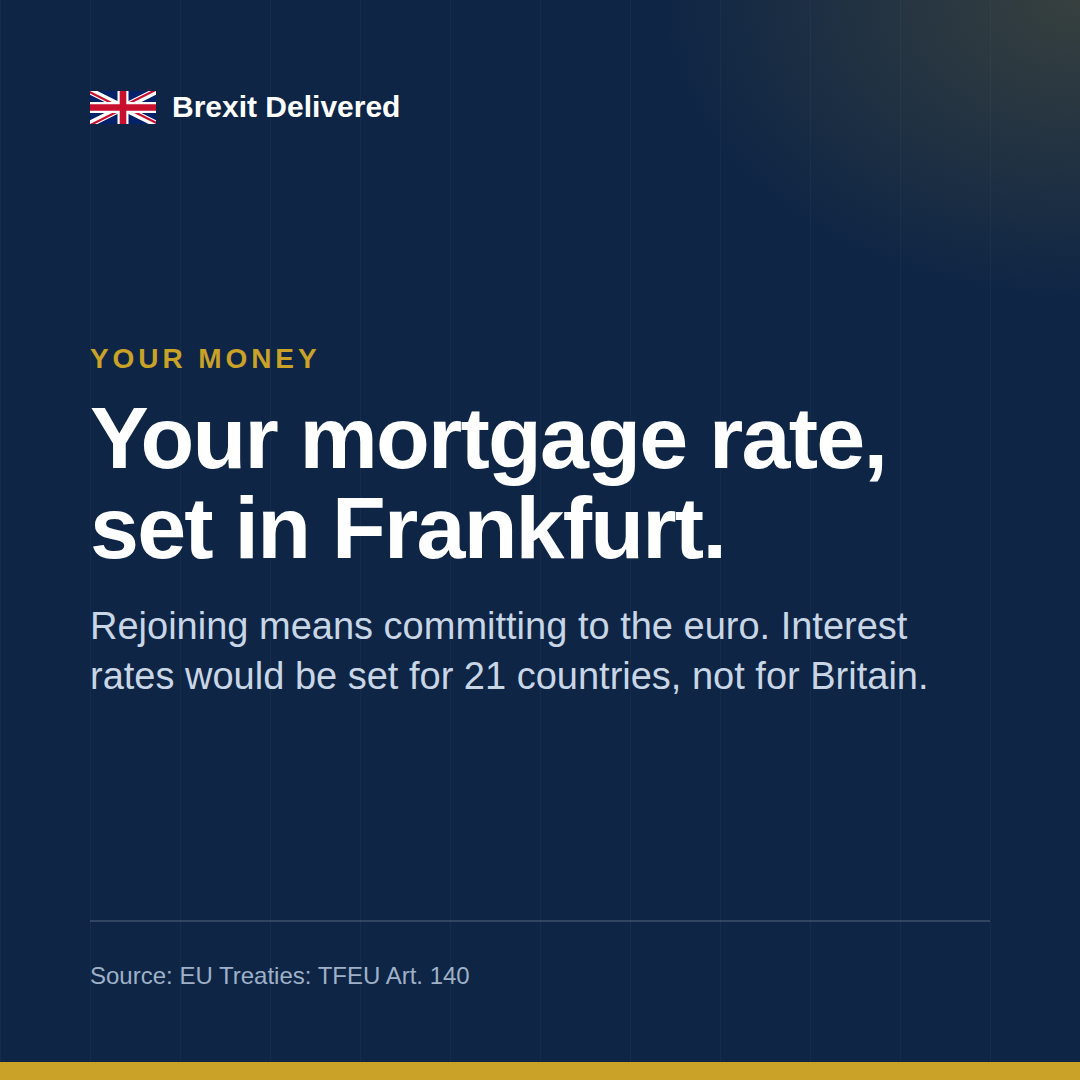
The fact: a new EU member commits to adopting the euro. Rates for all 21 euro countries are set by the European Central Bank in Frankfurt, not the Bank of England. See the rejoin terms
Britain should be free to sign its own trade deals.
The fact: inside the EU, only Brussels can sign trade deals. The UK's own agreements with India, Australia and the Pacific trade bloc would be given up. See the trade benefits
We should not pay more to get less.
The fact: the UK's rebate is gone. As Europe's second-largest economy, a returning UK would pay the second-largest bill and take on a share of EU debt until 2058. See what we'd give up
Closer to home
Pick what describes you. Every answer is already in force, and the full list gives the source for each.
These are examples from a selection of 50 Brexit benefits, each dated and sourced. "Only possible outside the EU" means EU law would have blocked it. "Made easier by leaving" means it was possible in principle but faster or simpler outside.
The bills we no longer share
The EU is spending and borrowing on a scale it never did while the UK was a member. A re-joining UK would be one of the largest net payers into all of it.
€192.8bn
Commitments for a single year, agreed in November 2025.
Council of the EU, 24 Nov 2025
~€2 trillion
1.26% of EU national income, with five new EU-wide revenue sources raising €58.2bn a year.
European Commission proposal, July 2025
€22–27bn
The EU borrowed to fund €421bn of Covid recovery grants. Repayments and interest are due from the EU budget until 2058. The UK owes nothing towards it.
Bruegel estimate for 2030; NextGenerationEU
€90bn
An EU loan to Ukraine, raised on the markets and backed by the EU budget. The UK supports Ukraine directly, on terms set by Parliament.
Council of the EU, 23 Apr 2026
€700bn+
Every euro member pays into the European Stability Mechanism. Re-joining brings a commitment to adopt the euro, and with it this liability.
ESM subscribed capital
€6bn
The EU's own auditors estimate 3.6% of checked spending broke the rules, and gave an adverse opinion for the sixth year running.
European Court of Auditors, Oct 2025
Bailouts
During the euro crisis, the EU used a fund guaranteed by the whole EU budget, including the UK's share, to lend to euro members. In 2015 the UK had to demand a guarantee that it would be protected from losses on a Greek loan it had not agreed to.
The UK keeps a limited contingent liability for EU loans agreed before it left, under the Withdrawal Agreement. It has no liability for any borrowing agreed since, including NextGenerationEU and the 2026–27 Ukraine loan. Sources
Explore the evidence

Fifty of the many, each dated and sourced, from trade deals to fishing, plus a bonus on new tech.
See the list →
No rebate, the euro, Schengen and shared EU debt. Plus how UK growth compares.
Compare the terms →
Who makes your laws, EU referendum reruns, Brussels pay, and the sovereignty timeline.
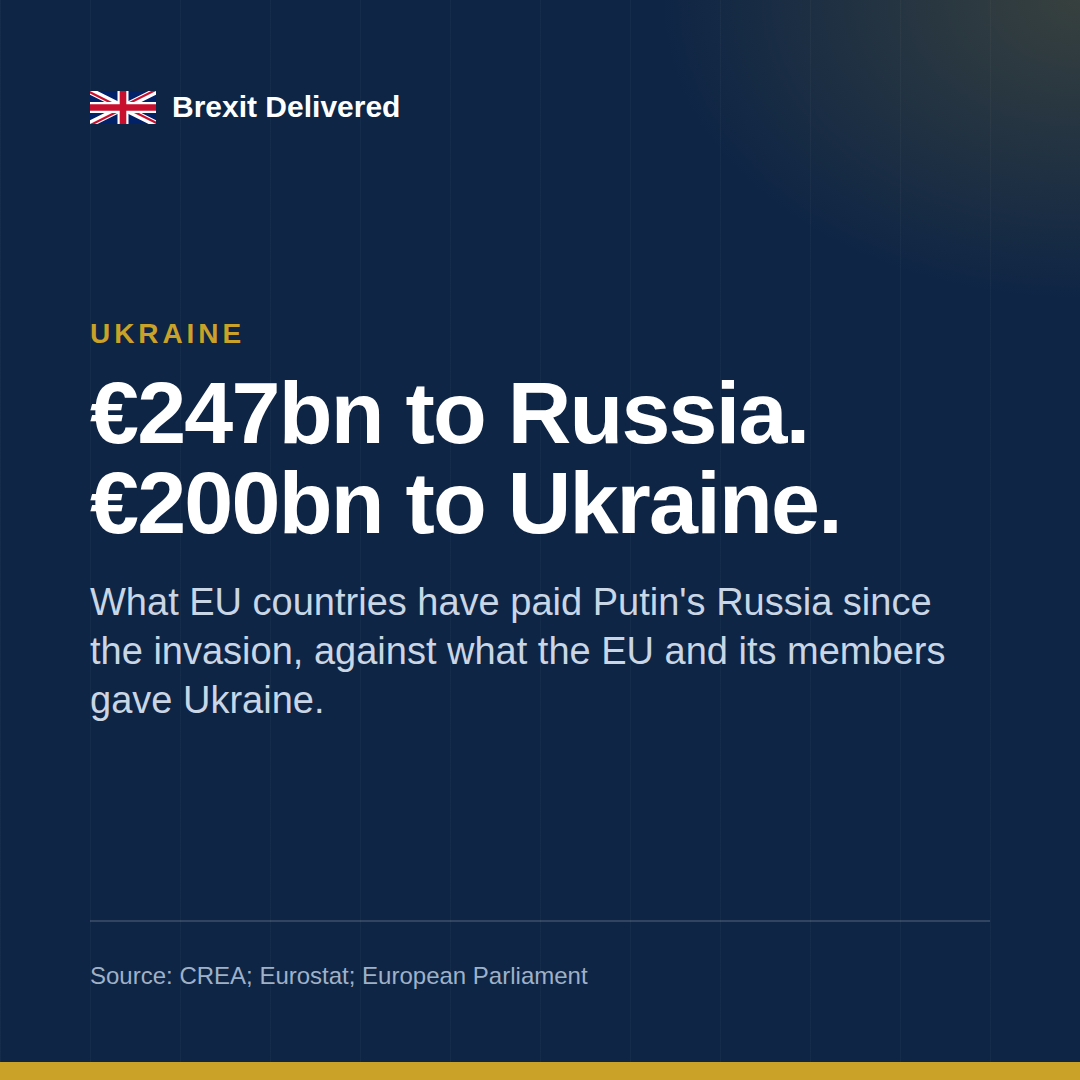
See who decides →The EU says it stands with Ukraine. Its members have paid Russia more than they have given Kyiv.
See the comparison →"No benefits", "economic failure", "cost of living" and more, answered with evidence.
Check the myths →Know a rejoiner? Send them one sourced Brexit benefit a day for 76 days, in your own words.
Start the 76 days →A permanent UN seat, the G7, NATO, Five Eyes and AUKUS. And who would speak for Britain inside the EU.
See where Britain sits →Recession, job losses, a house-price crash. What was predicted in 2016, and what happened.
See the record →Seven ways a government could use Brexit freedoms on tax, regulation and trade.
See the tools →Share the facts
Open a card, save the image and post it. Each one names its source.
Short, sourced updates when new figures are published. No spam, and you can unsubscribe at any time.
Common questions
Yes. The UK left the EU on 31 January 2020 and the transition period ended on 31 December 2020. The European Communities Act 1972 has been repealed, the European Court of Justice no longer has jurisdiction over Great Britain, and the supremacy of EU law in UK law ended on 1 January 2024.
Only to settle commitments made while it was a member, mainly pensions for former EU staff. Net payments were £0.7bn in 2025 and about £5.3bn remains to be paid up to 2065 (HM Treasury). The UK pays no membership fee and does not contribute to new EU budgets.
No official figure exists. In 2020 the UK paid £17.0bn gross after its rebate and £12.6bn net. A re-joining UK would have no rebate and would pay into a larger EU budget, proposed at almost €2 trillion for 2028–2034, and share the repayment of EU recovery-fund debt until 2058. This site uses a scenario range of £20–40bn a year gross. Britain Unbound estimates the bill at £35bn a year from 2028 (July 2026).
New EU members are legally committed to adopt the euro once they meet the entry criteria (Article 140 TFEU). The UK's old opt-out (Protocol 15) would not return automatically, and no new member has been granted a permanent opt-out since 1992.
Not automatically. The UK rebate ended when the UK left. Any new correction would need the unanimous agreement of all 27 existing members.
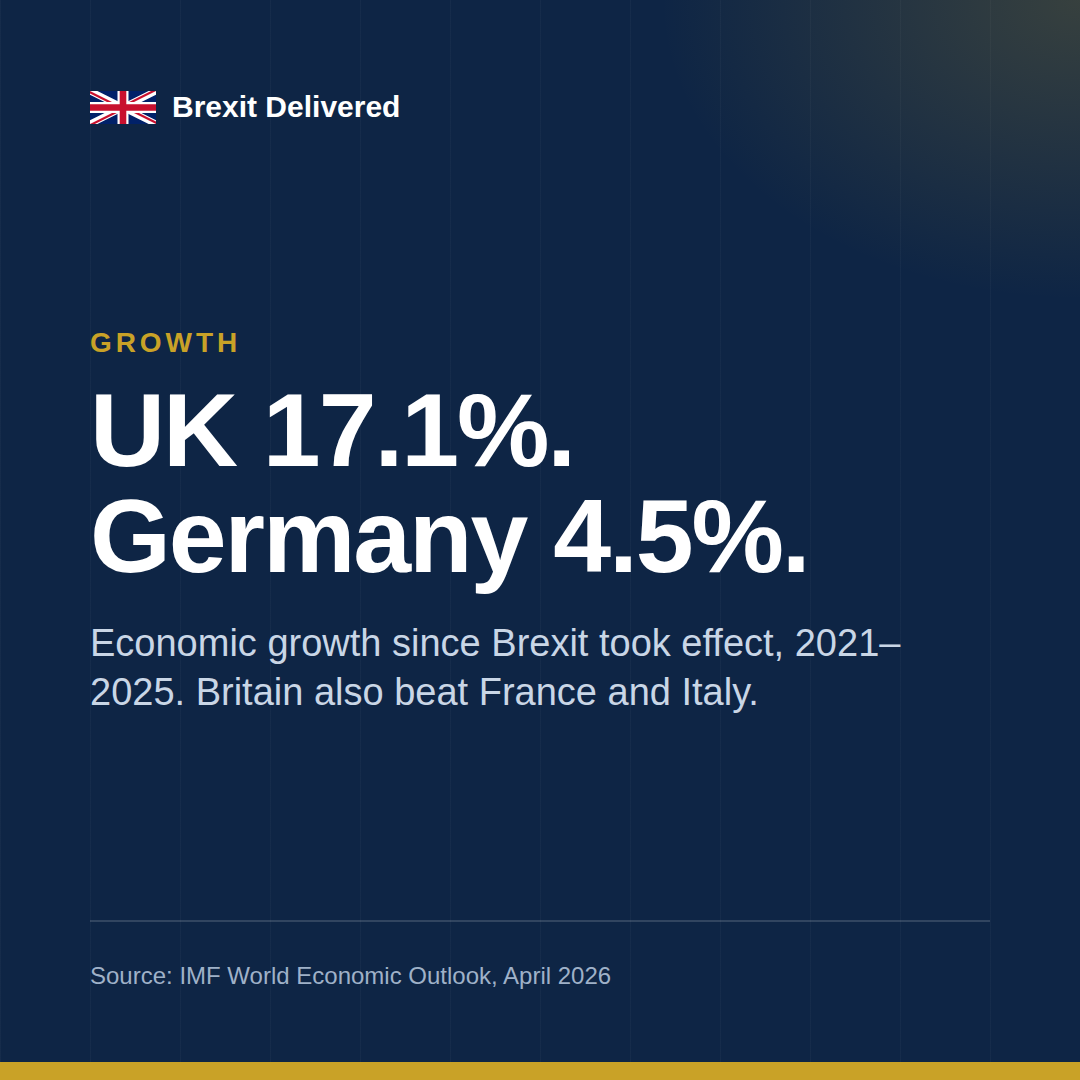
Yes, since the end of the transition period. IMF figures show UK real GDP grew 17.1% over 2021–2025, against 16.7% for Italy, 13.8% for France and 4.5% for Germany. Measured from 2019, before the pandemic, the UK is well ahead of Germany and level with France.
No. Commissioners are nominated by national governments and approved by the European Parliament in a single vote. Voters cannot remove them directly. Only the Commission can propose new EU laws.
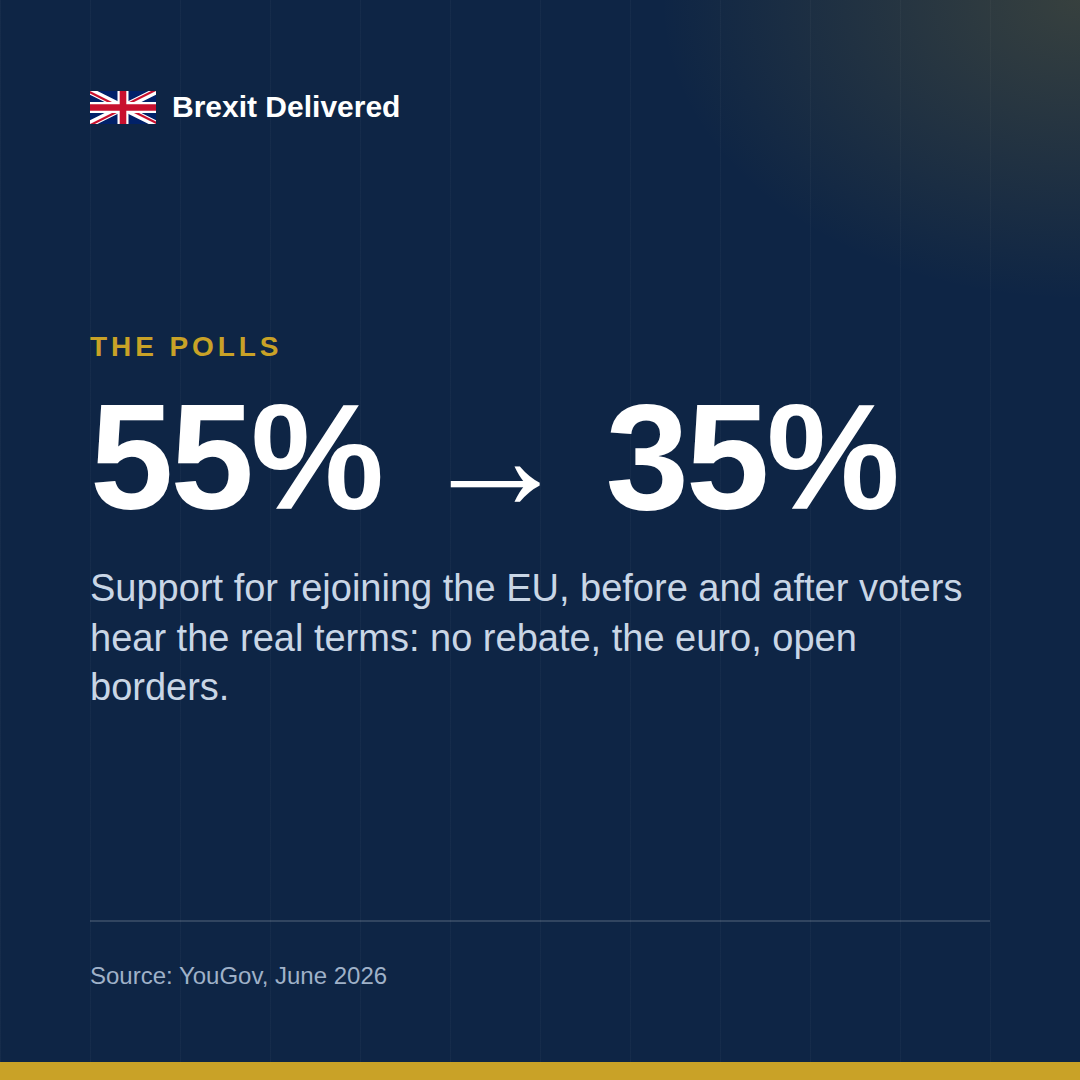
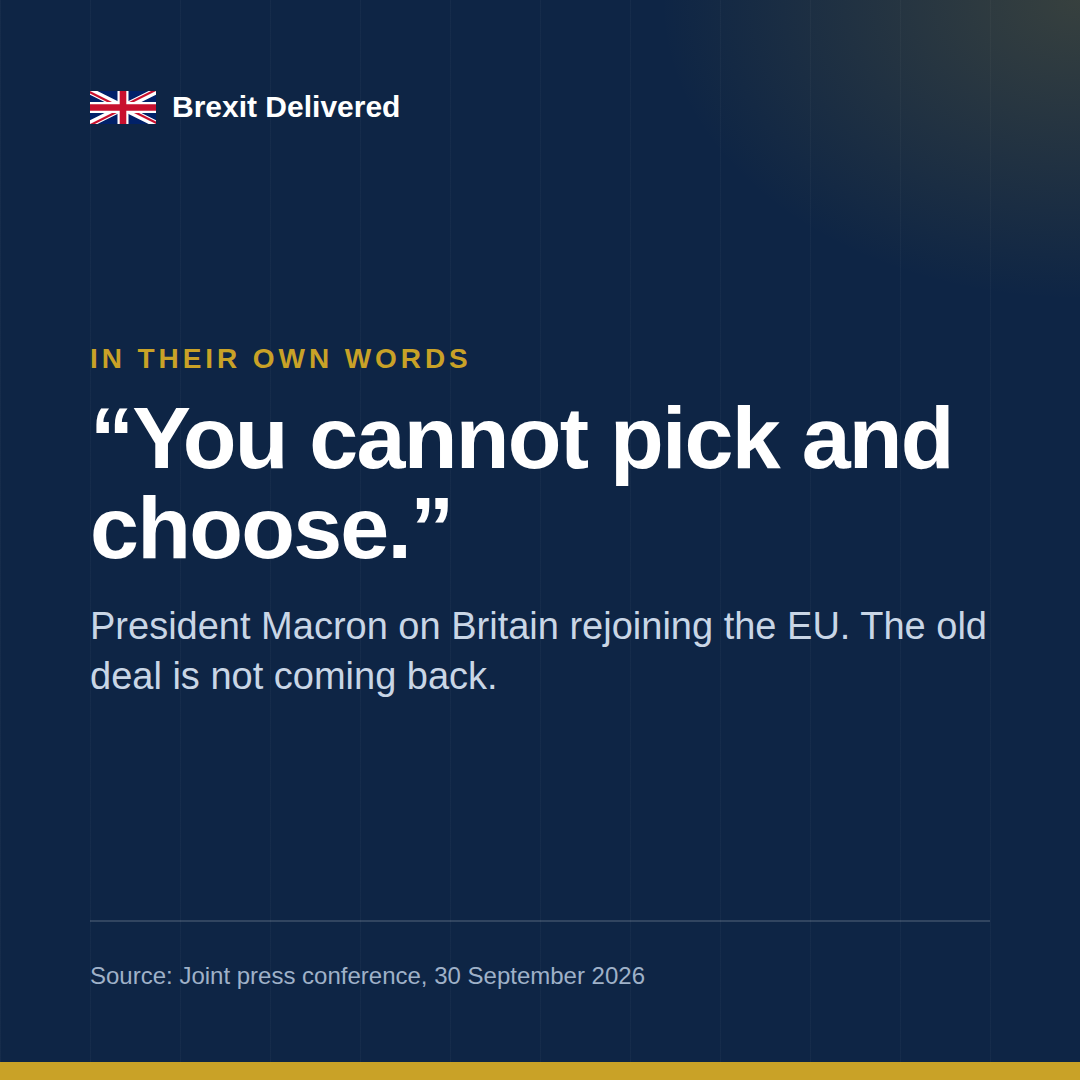
Headline polls show about 55% in favour. But when YouGov asked in June 2026 about rejoining without the UK's old opt-outs from the euro and passport-free travel, support fell to 35% and 43% were opposed. The old terms are not on offer: President Macron said in September 2026 that the UK could not pick and choose.
It means the UK agrees to follow EU rules in certain areas and to keep updating its own law whenever the EU changes them. Under the UK–EU reset this covers food and farm standards and carbon trading. The UK can comment on new rules but has no vote, and the EU's Court of Justice has the final say on what EU law means.
Not permanently. New EU members commit to adopting the euro once they meet the entry tests. Interest rates would then be set by the European Central Bank for all 21 euro countries, not by the Bank of England.
No. In 2024, 12.3% of UK registered businesses exported anything at all, so almost 9 in 10 did not export (Department for Business and Trade). About 133,000 businesses exported goods to any country in 2024, roughly 5% of registered businesses (HMRC), and exporters to the EU are only part of that number. As a member, the UK applied EU single-market rules to every business, whether or not it traded across a border.
The main short-term ones did not. The Treasury forecast an immediate recession, 500,000 to 800,000 job losses and house prices 10% to 18% lower within two years. Instead the economy grew in every quarter, the number of people in work rose by 640,000, unemployment fell to 4.0% and house prices rose 6.5% (ONS). The pound did fall sharply, as predicted.
No. Europe is a continent of more than 40 countries, and the EU is a political union of 27 of them. The UK left the EU in 2020 but remains part of Europe's defence, trade and diplomatic life through NATO, the Council of Europe, the European Political Community and its trade agreement with the EU.
No. The UK belongs to the 12-nation Pacific trade partnership (CPTPP) and has trade agreements with more than 70 countries. None of them has a parliament, a court whose rulings override national law, a common rulebook or free movement of people. Disputes go to arbitration panels set up case by case, and none runs a central budget remotely like the EU's. The EU is different by design: it is a political union with its own laws, court and a €192.8bn budget paid for by its members.
The EU's own administration costs €13.3bn in 2026. That covers the salaries, pensions and buildings of its institutions, out of a total budget of €192.8bn. The European Parliament's monthly move between Brussels and Strasbourg alone has been put at €114m a year by the EU's auditors.
Partly. The European Court of Auditors has signed off the accounts themselves as accurate every year since 2007. But it has never given a fully clean opinion on how the money is spent. For 2024 it gave an adverse opinion on spending for the sixth year running and estimated that 3.6% of it, about €6bn, broke the rules.
Not from voters. Labour's 2024 manifesto said "Britain will stay outside of the EU" and ruled out the single market, the customs union and free movement. Labour won 33.7% of the vote on that promise. Andy Burnham became Prime Minister on 20 July 2026 after being nominated by 379 Labour MPs and has not fought a general election as leader. He has said the next manifesto could include a referendum.
Fifth, on IMF estimates for 2026, at about $4.3 trillion. Only the United States, China, Germany and Japan are larger. The UK is also the world's fourth-largest exporter of goods and services (2024), the second-largest exporter of services after the United States, and London ranks second among global financial centres.
The EU is not a member of the UN or NATO. It is an observer at the UN General Assembly with no vote, and it attends the G7 but cannot chair or host it. It is a member of the G20 and the World Trade Organization. The UK is a full member of all five, with a permanent seat and a veto on the UN Security Council.
No. France is an EU member and keeps its permanent UN seat, its places in NATO and the G7 and its own embassies. What would change is trade, where the European Commission speaks for all members at the World Trade Organization, and the treaty duty to uphold EU positions in international bodies. In March 2023 the European Parliament voted to recommend a permanent EU seat on bodies including the UN Security Council and to turn EU delegations into "genuine EU embassies". That is a recommendation, not law.
No. Britain left the EU in 2020. Since then its exports of goods and services have grown by about a fifth after inflation, to £913bn in 2025, and Britain is the world's fourth-largest exporter. Services exports are up 51% to the EU and 37% to the rest of the world. Goods are weaker: down 2% to the EU and up 5% to the rest of the world. Measured from 2019, before the pandemic, goods exports are lower both to the EU (by 14%) and to the rest of the world (by 8%). Sales outside the EU fell too, so Brexit is not the only cause.
Further reading
Other organisations making the case for an independent Britain, and the official sources we rely on.
Brexit Delivered is independent of all these organisations. A link is not an endorsement of everything they publish.
Sources and methodology
We would rather you checked our figures than took them on trust. Here is how each one is built.
The £20–40bn range is a scenario estimate of the gross contribution the UK is not paying into today's EU budget. It is not an official forecast of a future membership fee. The main counter does not subtract Withdrawal Agreement payments, the EU spending the UK used to receive back, or any wider economic effects.
This is a scenario estimate, not an official forecast. It counts from 1 January 2021 and is a gross figure: it does not subtract Withdrawal Agreement payments, the EU spending the UK used to receive back, or any wider economic effects. Move the slider to test a lower or higher annual figure.
Counter = annual scenario × time elapsed since 00:00 GMT on 1 January 2021 (the transition period is excluded). Per day = annual ÷ 365.25. Per second = per day ÷ 86,400.
For context: in 2020, the last year paid at membership rates, the UK's gross contribution after the rebate was £17.0bn. It received £4.5bn back in EU spending, giving a net contribution of £12.6bn (House of Commons Library, CBP-7886). The scenario range assumes a larger EU budget than in 2020 and no rebate, which is the position a re-joining UK would face. Choose the lower end of the slider if you prefer a figure closer to the historical one.
House of Commons Library: The UK's contribution to the EU budget
Base: £18.9bn net invoices paid June 2021 to December 2025 (HM Treasury, European Union Finances Statement 2025, Table 3.B). From 1 January 2026 the counter adds an illustrative run-rate of £0.7bn a year, the 2025 net outturn. It will be replaced by ONS and HMT outturn as it is published. The remaining forecast (£5.3bn at 31 December 2025, of which £0.2bn was invoiced for January to May 2026) is shown separately and reduced by the run-rate.
| Calendar year | Net paid (£bn) |
|---|---|
| 2020 (transition) | 9.4 |
| 2021 (from June) | 1.8 |
| 2022 | 6.4 |
| 2023 | 6.3 |
| 2024 | 1.0 |
| 2025 | 0.7 |
Table 3.A (above, calendar-year net) sums to £16.2bn for 2021 to 2025. We use the higher Table 3.B invoice figure of £18.9bn so the counter does not understate what is being paid. Total net payments since February 2020, including the transition year, were £25.7bn.
| Item | Unit cost | Basis | Source |
|---|---|---|---|
| Nurse | £41,431 | Annual salary benchmark | NHS Agenda for Change pay (DHSC / NHS Employers) |
| Police officer | £50,257 | Annual salary benchmark | Home Office police pay scales |
| Teacher | £51,048 | Annual salary benchmark | DfE, School Teachers' Pay and Conditions |
| Hospital | £1.366bn | Average New Hospital Programme scheme | DHSC; National Audit Office |
| School | £25m | Illustrative new-build primary/secondary | DfE school rebuilding programme |
| Prison | ~£700m | 1,000-place new prison | Ministry of Justice; NAO |
| Income-tax payers | 40.8m | Projected, 2026/27 | HMRC Income Tax statistics |
People are counted as annual scenario ÷ unit cost (a recurring cost). Buildings are counted as cumulative total ÷ unit cost (a one-off cost). Salaries exclude employer on-costs.
Annual real GDP growth from the IMF World Economic Outlook, April 2026, Statistical Appendix Table A2, compounded: UK 2021–25: 8.5, 5.1, 0.3, 1.1, 1.3. Germany: 3.9, 1.8, −0.9, −0.5, 0.2. France: 6.8, 2.8, 1.6, 1.1, 0.9. Italy: 8.9, 4.8, 0.9, 0.8, 0.5. 2020: UK −10.0, Germany −4.1, France −7.6, Italy −8.9.
The UK fell further than the others in 2020, so part of its 2021–25 growth was recovery. The pre-pandemic view in the chart removes that effect. These are whole-economy figures, not per head. The Q2 2026 comparison is from the House of Commons Library briefing SN02784 (September 2026).
IMF World Economic Outlook, April 2026 · House of Commons Library: GDP international comparisons
2026 budget: €192.8bn commitments, €190.1bn payments (Council of the EU, 24 November 2025). 2028–2034 proposal: almost €2 trillion in current prices, 1.26% of EU GNI, with five new own resources worth €58.2bn a year in 2025 prices (Council of the EU). The proposal is still under negotiation.
NextGenerationEU: €806.9bn in total, of which about €421bn is grants to be repaid from the EU budget by 2058. Bruegel estimates combined principal and interest at €22–27bn in 2030 (Analysis 28/2023). Ukraine support loan: €90bn for 2026–27, financed by EU borrowing backed by EU budget headroom (Council, 23 April 2026).
EFSM lending to Ireland (€22.5bn) and Portugal (€24.3bn) in 2011, and the €7.16bn Greek bridging loan in July 2015, after which the UK and other non-euro members secured protection from losses. Greek programmes 2010–2018 totalled about €289bn (ESM). European Court of Auditors 2024 annual report: estimated error 3.6%, about €6bn, adverse opinion on expenditure.
Council: 2028–2034 budget · Bruegel: cost of recovery debt · Council: €90bn Ukraine loan · ECA annual report 2024 · Commons Library: Greek debt crisis 2015
Polling: YouGov (June 2026) found 55% support for rejoining, falling to 35% (43% opposed) if the UK's former opt-outs were not available. The same study found 58% of French and 63% of German respondents support the UK rejoining, but only 18–20% think it should return on its old terms. Quotes: Emmanuel Macron at a joint press conference on 30 September 2026; Tony Blair on 25 September 2026.
£525bn estimate: Briefings for Britain (3 July 2026, updated 10 August 2026). It models the UK's avoided contribution as 10% of EU payment appropriations for 2021–2064, subtracts £16.2bn of settlement payments made in 2021–2025 and £5.3bn still due, and discounts at the Treasury's 3.5% rate. Its low and high cases are £416bn and £634bn. It is a projection, not an official figure.
£35bn estimate: Britain Unbound, "The new cost of EU membership", 16 July 2026. It assumes the UK rejoins in 2028 without a rebate or opt-outs and applies the European Commission's proposed 2028–2034 budget of almost €2 trillion, including its proposed new EU-wide revenue sources. We could not open the original paper, so the figure is as reported by Brit Brief. It is a campaign group's projection, not an official figure, and sits inside this site's £20–40bn scenario range.
The EU today: AfD vote share of 43.8% in Saxony-Anhalt, 6 September 2026 (Chatham House). France's 2027 presidential polling (UK in a Changing Europe, June 2026). Germany's growth from IMF World Economic Outlook, April 2026. Euro area membership is 21 countries since Bulgaria joined on 1 January 2026. The UK's economy is larger than France's and second in Europe to Germany's (IMF), and EU contributions are based mainly on national income.
Why people voted to leave: in Lord Ashcroft's poll of 12,369 voters on referendum day, 49% of Leave voters said their biggest single reason was "the principle that decisions about the UK should be taken in the UK" (Lord Ashcroft Polls, 24 June 2016). The referendum question itself was: "Should the United Kingdom remain a member of the European Union or leave the European Union?" The EU's pledge to support Ukraine "for as long as it takes" is from European Council conclusions, repeated at successive summits since 2022.
The mandate: Labour Party manifesto 2024, "Britain reconnected". Labour won 33.7% of the vote at the 2024 general election (House of Commons Library, CBP-10009). Andy Burnham won the Makerfield by-election on 18 June 2026, became Labour leader unopposed on 17 July 2026 with nominations from 379 MPs, and became Prime Minister on 20 July 2026. His remarks on a referendum were reported on 30 September 2026.
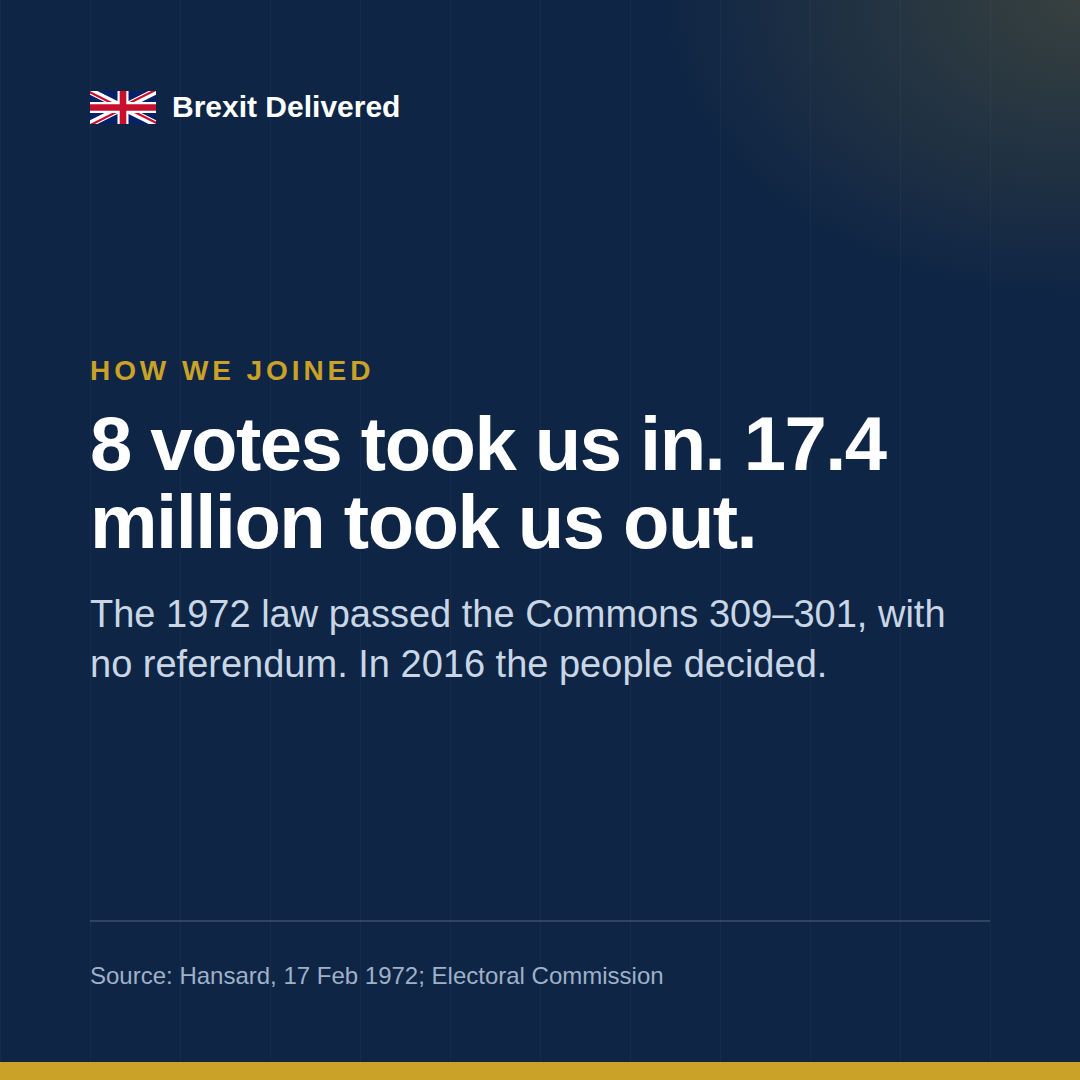
The reset: UK–EU Summit Common Understanding, 19 May 2025; written evidence DYN0070 to the House of Lords European Affairs Committee. The European Scrutiny Committee was not re-established after the July 2024 general election. European Communities Bill second reading, 17 February 1972: 309 votes to 301.
YouGov: French and German views · Briefings for Britain: fiscal savings · Britain Unbound: the new cost of EU membership · Chatham House: Saxony-Anhalt · UK in a Changing Europe: France 2027 · Lords committee evidence on dynamic alignment · Labour manifesto 2024: Britain reconnected · Institute for Government: the Prime Minister's options
Votes: 17,410,742 for Leave (51.9%) and 16,141,241 for Remain (48.1%) (Electoral Commission). Nine of the UK's twelve nations and regions voted Leave. Constituencies: referendum votes were counted by local authority, so seat results are estimates by Professor Chris Hanretty (Royal Holloway, University of London), which Full Fact summarises as about 410 Leave and about 240 Remain, with 148 of 232 Labour-held seats and 249 of 330 Conservative-held seats (2015 general election results) probably voting Leave. Exact results are known for only about a fifth of seats. MPs: a Press Association survey before the vote found 480 MPs for Remain, 159 for Leave and 11 undeclared. The House of Commons Library puts declared support for Leave at 24% of MPs. Article 50: the Commons gave the European Union (Notification of Withdrawal) Bill a second reading by 498 votes to 114 on 1 February 2017.
Full Fact: referendum results by constituency · Full Fact: Conservative and Labour constituencies · Commons Library: the people vs Parliament? · Chris Hanretty: revised constituency estimates · Notification of Withdrawal Act 2017
Exporting businesses: 335,000 of 2,712,065 UK businesses registered for VAT or PAYE exported goods or services in 2024, or 12.3% (Department for Business and Trade, "Number of exporting registered businesses in the UK, 2016 to 2024", published 20 August 2026). The figures exclude the financial sector. HMRC's customs figures count 133,285 businesses that exported goods to any country in 2024, down 7% from 142,684 in 2023; against 2.725 million VAT or PAYE registered businesses (ONS, March 2024) that is about 5%. HMRC's summary does not give a single count of businesses exporting goods to the EU, so we do not quote one. Earlier estimates put the share of businesses exporting to the EU at 5–8% (Full Fact, 2016).
Corporation tax: main rate 28% in 2010–11, 19% from 2017–18, 25% from April 2023, with a 19% small profits rate. Onshore receipts rose as a share of GDP after 2011–12; the OBR attributes this mainly to growth in company profits (House of Commons Library, CBP-9178). Company incorporations: 815,277 in the year to March 2026 (Companies House). The European Commission proposed a common corporate tax framework (BEFIT) in September 2023. VAT: while the UK was a member, EU rules set a 5% minimum for reduced VAT rates, including on household energy (Full Fact, May 2016). Public procurement: £461bn in 2025/26 (House of Commons Library, CBP-9317).
DBT: exporting businesses · Full Fact: businesses exporting to the EU · HMRC: customs importer and exporter population 2024 · Commons Library: corporate tax reform · Companies House: register statistics
Trade since Brexit: UK exports of goods and services were £913bn and imports £953bn in 2025, with a goods deficit of £234bn and a services surplus of £195bn (House of Commons Library, Trade in goods and services: economic indicators, SN02815, 30 September 2026). UK exports in real terms (2023 prices, £bn; ONS series JIM8, JIN3, JLTT and JLV3 as published by the House of Commons Library): goods to the EU 215 in 2019, 188 in 2020 and 184 in 2025; goods to non-EU countries 221, 192 and 202; services to the EU 152, 129 and 195; services to non-EU countries 257, 236 and 324. The four series sum to 845 in 2019, 745 in 2020 and 905 in 2025, a rise of 21% since 2020 and 7% since 2019 (our calculation). The UK left the EU on 31 January 2020 and traded under EU rules until 31 December 2020. In real terms, goods exports in 2025 were 14% below 2019 to the EU and 8% below to non-EU countries; services exports were 28% above 2019 to the EU and 26% above to non-EU countries (House of Commons Library, Statistics on UK–EU trade, CBP-7851, 12 June 2026). Services were £545.8bn of £923.3bn total exports in the first ONS estimate for 2025, or 59% (ONS, UK trade: December 2025). Exports fell 16.9% in cash terms in 2020 (ONS, UK trade: December 2020). Because 2020 was a pandemic year, we give the 2019 comparison alongside it. We do not adjust trade values by consumer price inflation.
Commons Library: trade in goods and services · Commons Library: UK–EU trade statistics · ONS: UK trade, December 2025 · ONS: UK trade, December 2020
Sterling: the pound was $1.35 and €1.17 in August 2026, and its post-referendum high was $1.43 in April 2018 (House of Commons Library, SN02811, September 2026). It fell from about $1.50 to about $1.32 overnight on 23–24 June 2016.
2016 predictions: HM Treasury, The immediate economic impact of leaving the EU (Cm 9292, May 2016): "shock" scenario of four quarters of negative growth, about 500,000 more unemployed and house prices 10% lower after two years; "severe shock" of about 800,000 and 18%. Outcomes: ONS quarterly GDP growth (series IHYQ) was positive in every quarter from Q3 2016 to Q2 2018; ONS labour market bulletins for August 2016 and August 2018; ONS UK House Price Index for June 2016 and June 2018. Treasury Committee report HC 122, 27 May 2016.
NHS: Department of Health budget of £120bn in 2016/17 (The King's Fund); Department of Health and Social Care budget of £204.7bn in 2024/25 (House of Commons Library, SN00724). The difference of £84.7bn a year is £1.6bn a week in cash terms. These are England figures and are not adjusted for inflation; average real growth was 3.1% a year between 2015/16 and 2023/24 (The King's Fund).
Estimates of Brexit's cost: the OBR took "the average estimated effect from studies by NIESR, the OECD and LSE/CEP", says "the range of estimates is wide" and assumes the effect builds over 15 years (March 2020). In March 2023 it said its trade assumption was "broadly on track". The 6% to 8% figures are from a National Bureau of Economic Research paper (November 2025). The Centre for European Reform's comparison put the cost at 5.5% by mid-2022; Gudgin and Lu found the United States made up 30.4% of that comparison. The six-figure table on the Myths page summarises Britain Unbound's explainer "Brexit loss of GDP predictions" (3 May 2026), which also covers Bloomberg Economics' £100bn estimate (31 January 2023) and the Frontier Economics report for Best for Britain (February 2025). Britain Unbound and the economist Julian Jessop, who sits on its advisory council, write from the pro-Brexit side. The OBR said in March 2024 that its 15% trade assumption "appeared to be broadly on track".
Europe, borders and EU running costs: the 2026 EU budget sets €13,277.5m for "European public administration" and €5,018.9m for migration and border management, out of €192,768.1m (European Parliament Legislative Observatory). EU audit: the Court of Auditors has given a clean opinion on the reliability of the accounts since 2007 but "has never provided a fully positive assessment of the spending of EU funds" (House of Commons Library; Full Fact); its opinion on spending was qualified for 2016 to 2018 and adverse for 2019 to 2024. Referendum voting by ethnic group and reasons for voting Leave: Lord Ashcroft Polls, 12,369 voters, 23 June 2016. Attitudes to immigration: World Values Survey wave 7, UK fieldwork 2022 (King's College London).
Small boats: Home Office figures for people detected arriving by small boat. Dublin transfers from House of Commons Library briefing CBP-11583 and the Migration Observatory. The Dublin Regulation stopped applying to the UK on 31 December 2020. A UK–France returns pilot began in 2025.
HM Treasury analysis (May 2016) · ONS labour market, August 2018 · ONS House Price Index, June 2018 · Treasury Committee report · Full Fact: is the EU budget signed off? · Commons Library: auditing the EU accounts · King's College London: attitudes to immigration · Lords Library: UK and Europe · OBR: productivity assumption · OBR: Brexit analysis · NBER: the economic impact of Brexit · Bloomberg: £100bn a year · Best for Britain: 2.2% report · Julian Jessop: debunking the dodgy stats · Gudgin and Lu working paper · Portes: how much has Brexit cost? · Britain Unbound: GDP predictions explainer · The King's Fund: NHS budget · Commons Library: small boats · Migration Observatory: Dublin and returns
Rankings: nominal GDP, IMF World Economic Outlook 2026 estimates (United States $32.4tn, China $20.9tn, Germany $5.5tn, Japan $4.4tn, United Kingdom $4.3tn, India $4.2tn, France $3.6tn, Italy $2.7tn). Exports of goods and services: World Bank data for 2024 (China $3.79tn, United States $3.23tn, Germany $1.94tn, United Kingdom $1.14tn, France $1.07tn, Netherlands $1.00tn, Japan $0.92tn). The UK rose from seventh in 2021 to fourth in 2022 on UNCTAD figures, announced by the Department for Business and Trade in April 2024. Goods alone: World Trade Organization, 2024 (UK 14th, $513bn). Services exports: US International Trade Commission, Recent Trends in US Services Trade 2026, section 3 (2024 shares: United States 12.8%, United Kingdom 7.4%, Ireland 5.9%, Germany 5.3%). Financial centres: Global Financial Centres Index 40 (Z/Yen and China Development Institute, September 2026); New York overtook London in September 2018. Defence: SIPRI fact sheet, April 2026 (2025 spending: United States $954bn, China $336bn, Russia $190bn, Germany $114bn, India $92.1bn, United Kingdom $89.0bn). Soft power: Brand Finance Global Soft Power Index 2026 (193 nations). Diplomatic posts: National Audit Office, FCDO overview 2024–25 (280 posts in 180 countries and territories, September 2025); Lowy Institute Global Diplomacy Index 2024 (UK 225 posts, France 249, EU 143). The two sources count posts differently.
Seats: Five Eyes rests on the UKUSA Agreement of 5 March 1946, later joined by Canada, Australia and New Zealand. AUKUS was announced on 15 September 2021. The EU has been an observer at the UN since 1974, with extra speaking rights under General Assembly resolution 65/276 (2011), and has no vote. It is a "non-enumerated" member of the G7 and cannot chair or host. The World Trade Organization states that the European Commission "speaks for all EU member States at almost all WTO meetings". Seven countries appoint their own IMF executive director: the United States, Japan, China, Germany, France, the United Kingdom and Saudi Arabia. The UK became the sixth contracting party to the North-East Atlantic Fisheries Commission on 7 October 2020. G20: HM Government announcement, 23 September 2026.
The treaties: Treaty on European Union, Articles 17(3), 34 and 35; Treaty on the Functioning of the European Union, Articles 3 and 207 (trade). Proposals: European Parliament recommendation of 15 March 2023 on the functioning of the European External Action Service (451 for, 133 against, 48 abstentions); Group of Friends on Qualified Majority Voting, launched 4 May 2023 by Belgium, Finland, France, Germany, Italy, Luxembourg, the Netherlands, Slovenia and Spain; Olaf Scholz, speech in Berlin, 28 November 2018; European Commission proposal for unified euro-area representation at the IMF, COM(2015) 603. These are proposals and recommendations, not law.
Population vote: the EU had 450.4 million people on 1 January 2025 (Eurostat) and the UK 69.3 million in mid-2024 (ONS), so the UK would hold about 13% of the population of an EU of 28. Tanks: the UK announced Challenger 2 tanks on 14 January 2023; Germany and the United States announced Leopard 2 and Abrams tanks on 25 January 2023. Czechia and Poland had sent Soviet-designed tanks in 2022, and Polish Leopards reached Ukraine before the British tanks did (Full Fact).
IMF GDP estimates (table) · Exports of goods and services by country (World Bank data, table) · City AM: UK becomes fourth-largest exporter · WTO goods exports 2024 (chart) · USITC: global services trade · Global Financial Centres Index 40 · SIPRI: military expenditure 2025 · Brand Finance: Soft Power Index 2026 · NAO: FCDO overview · Lowy Global Diplomacy Index · WTO: the EU and the WTO · Treaty on European Union, Article 34 · European Parliament recommendation, March 2023 · Euronews: nine countries and the veto · The Local: Scholz on France's UN seat · European Parliament Research Service: euro area and the IMF · GOV.UK: G20 summit 2027 · Full Fact: tanks for Ukraine
The counter adds two parts. Non-energy goods: €11bn a year from 1 January 2025 (EU imports from Russia of €28bn in 2025, of which energy €17bn; Eurostat). Non-energy imports in 2022–2024 were larger but are left out because we could not verify them, so the counter understates the true total. Fossil fuels: about €205bn paid by EU countries for Russian oil, gas and coal from 24 February 2022 to the end of the war's third year (CREA tracker, as reported by Euronews, March 2025), plus €14.5bn in the fourth year to February 2026 (CREA), giving about €219.5bn at 24 February 2026. After that the counter adds €14.5bn a year. Actual 2026 payments are likely to be lower because EU short-term gas contracts ended in June 2026, so treat the live figure as an upper estimate.
Oil and gas revenues provided about 30% of Russia's federal budget revenue in 2024 (Russian Ministry of Finance), which is why fuel purchases are widely described as funding the war.
Aid: about €200bn of military, financial and humanitarian support from the EU and its member states since February 2022 (European Parliament Research Service, "State of play: EU support to Ukraine"). This includes loans. In the third year of the war, EU fossil fuel imports (€21.9bn) exceeded EU financial aid to Ukraine in 2024 (€18.7bn) (CREA). In 2025 EU institutions provided €35.1bn (Kiel Institute), more than EU fuel payments that year.
Other imports: EU imports from Russia totalled €28bn in 2025, of which energy €17bn (Eurostat). Fertiliser €1.7bn and seafood €739m in 2025 (Eurostat, via Ekonomichna Pravda). Semi-finished iron €1.3bn and nickel mattes €518m in 2025 (ECIPE). Uranium and nuclear fuel over €700m in 2024; LNG 17.3m tonnes in 2024 (Kpler). UK bans: Russian oil from 5 December 2022, LNG from 1 January 2023. UK goods imports from Russia: £85m in the four quarters to Q1 2026 (DBT Russia trade and investment factsheet). UN Comtrade data also record small UK imports of Russian urea fertiliser, about US$43m in January–July 2025.
CREA: fourth year of invasion · CREA: third year · Euronews fact-check · EPRS: EU support to Ukraine · Kiel Institute · Kpler · ECIPE
MEPs: salary €11,255.26 gross a month; general expenditure allowance €4,950 a month; daily allowance €359 (2026); staff allowance up to €32,072 a month (2026); pension from 63 at 3.5% per year, up to 70% (European Parliament). Commission: basic salary 112.5% (Commissioners) and 138% (President) of the top grade AD16 step 3, €25,986.17 a month from 1 July 2025; residence allowance 15%; transitional allowance for up to three years (Regulation (EU) 2016/300). EU tax rates 8–45% (Regulation 260/68). UK MP salary £93,904 from April 2025 (IPSA).
Immunities: Protocol 7 on the Privileges and Immunities of the EU, Articles 8–9 (MEPs) and 11 (officials and Commissioners). Strasbourg seat cost: European Court of Auditors estimate, 2014.
All Acts cited are available at legislation.gov.uk. EU Treaty articles and protocols are from the consolidated Treaty on European Union and Treaty on the Functioning of the European Union, available at EUR-Lex.